A theatre seating plan can look intimidating if you have never used one before. Rows of letters, colour-coded sections, unfamiliar names like 'slip seats' and 'restricted view', and prices that vary wildly from one seat to the next. It is enough to make you just click 'best available' and hope for the best. This guide explains how to read a West End seating plan so you can make an informed choice about where to sit. Once you understand the layout, you will spot the value seats that most people miss.
How to read a theatre seating plan is one of those things nobody teaches you, but everyone assumes you already know. When you are booking London theatre tickets, the seating plan is the most important tool you have for getting the experience you want at a price you are happy with. Here is how to make sense of it.
What are the main seating sections in a West End theatre?
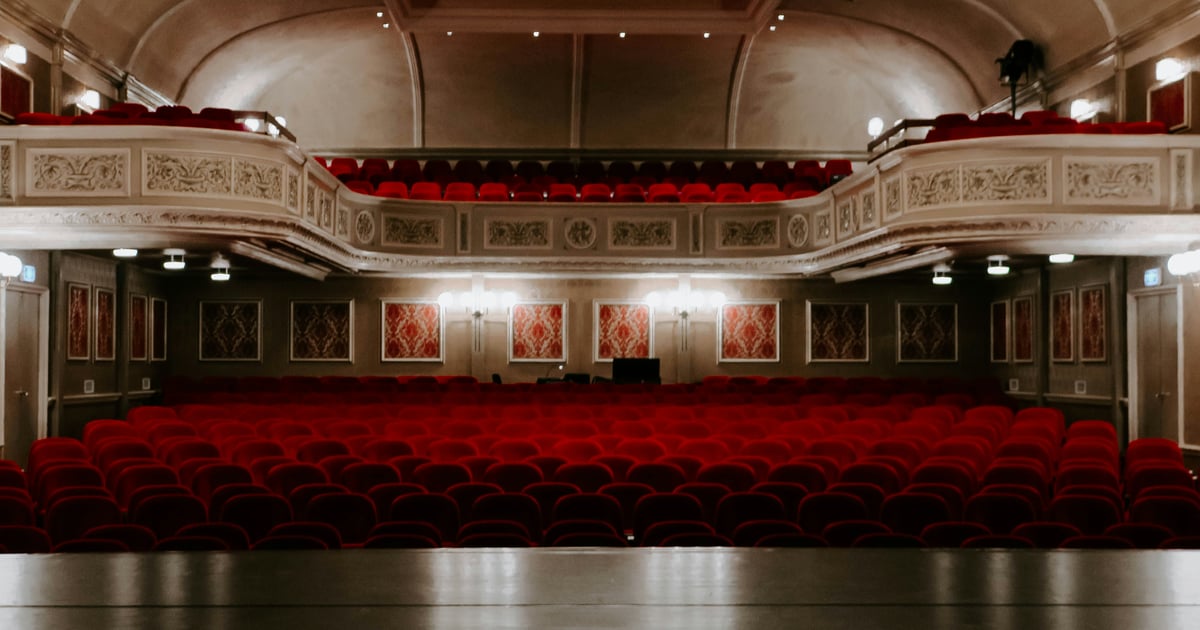
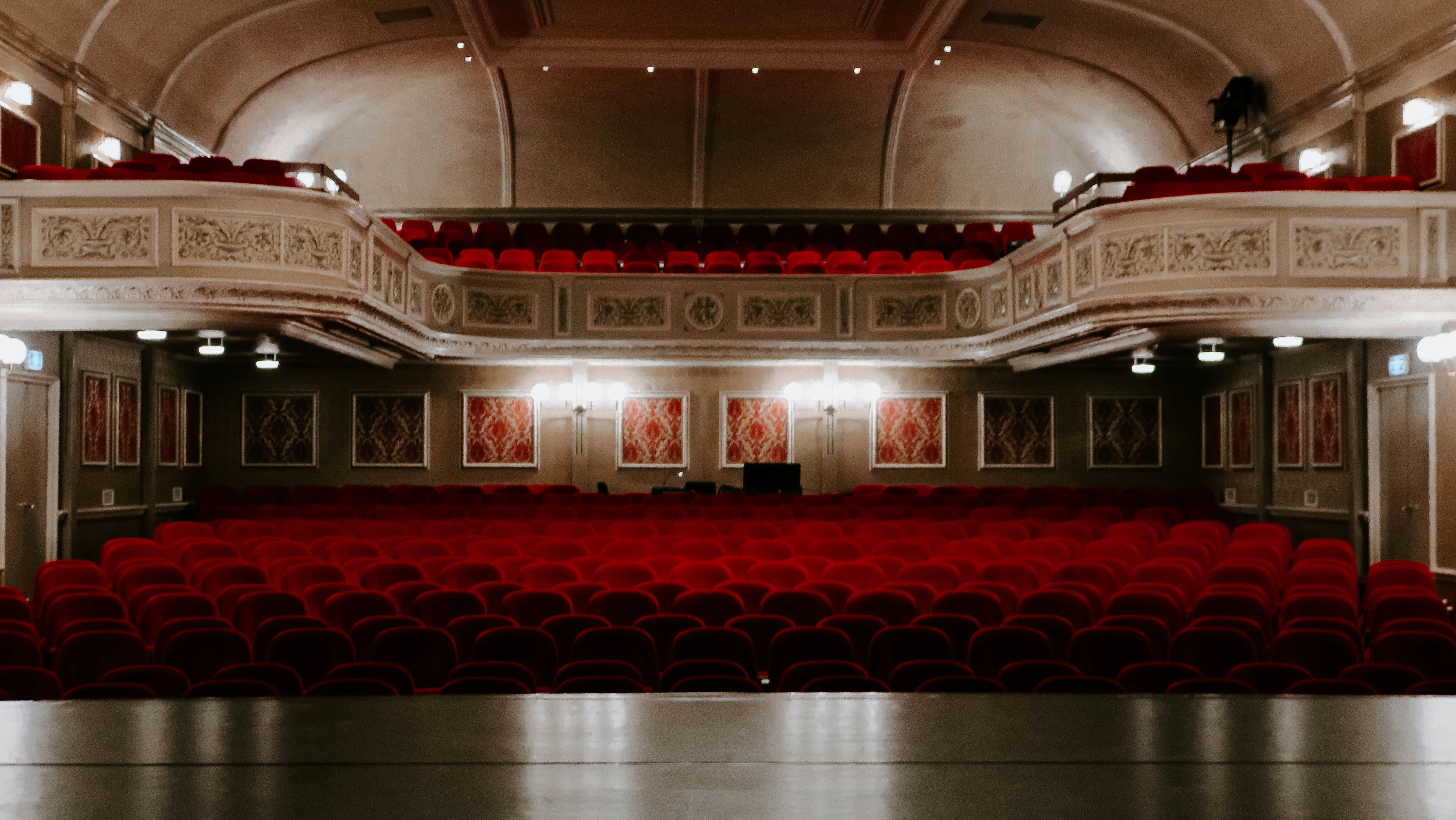
Most West End theatres have between three and five seating levels stacked vertically. Here is what they are, from bottom to top:
Stalls: The ground-floor level, closest to the stage. This is usually the largest section. Front stalls put you very close to the performers, which is immersive but can mean looking up at an angle. Mid-stalls (roughly rows F-M depending on the theatre) are often considered the best seats in the house. Rear stalls are further back but still on the flat, and usually offer good value.
Dress Circle (or Royal Circle): The first raised level. You look down at the stage from a gentle angle. Front-row dress circle seats are frequently cited as the best overall view in many West End theatres, because you see the full stage without craning. This is a particularly good level for visually rich shows like Wicked tickets at the Apollo Victoria, where the flying and set design are best appreciated from a slight elevation.
Grand Circle (or Upper Circle): One level higher than the dress circle. Steeper, further from the stage, and usually cheaper. Centre seats in this section still give a perfectly good view of the action. The seats at the edges are where the view starts to suffer.
Balcony (or Upper Balcony or Gallery): The highest level, sometimes called 'the gods'. The cheapest seats, the furthest from the stage, and the steepest rake. Centre seats here are watchable but distant. Edge seats can feel very removed. Legroom is typically the tightest at this level.
Not every theatre has all of these levels. Smaller theatres may only have stalls and a circle. Larger ones may have four or five levels with different names. The principle is always the same: lower is closer and more expensive, higher is further and cheaper.
| Level | Position | Typical price | Best for | Watch out for |
|---|---|---|---|---|
| Stalls (front) | Ground floor, nearest stage | Premium | Detail, immersion, facial expressions | Looking up at an angle, missing overhead scenery |
| Stalls (mid) | Ground floor, rows F-M | Premium | The most balanced overall view | Sells out first, so book early |
| Stalls (rear centre) | Ground floor, back third | Mid | Wide, complete view at a fairer price | Overhang from the circle on the very back rows |
| Dress / Royal Circle | First raised level | Mid to premium | Full-stage view from a gentle elevation | Front-row rail at some venues |
| Grand / Upper Circle | Second raised level | Budget to mid | Clear centre view for less | Steeper rake, weaker views at the edges |
| Balcony / Gallery | Highest level | Cheapest | Music-led shows, tight budgets | Distance, tight legroom, steep rake |
What do the row letters and seat numbers mean?
Rows are labelled with letters, starting from the front. Row A is the first row, Row B is the second, and so on. Some theatres skip certain letters (like I, which looks like the number 1) or start at a different letter if the first few rows have been removed or reconfigured.
Seat numbers within each row count from one side to the other. Centre seats have the numbers in the middle of the range. If a row has seats 1-30, seats 14-17 are centre. Edge seats (1-3 and 28-30 in this example) are at the extreme sides.
Centre seats almost always give a better view than edge seats. If you are choosing between a centre seat further back and an edge seat closer, go centre.
What does restricted view actually mean in practice?
Restricted view means something partially blocks your sightline to the stage. On a seating plan, these seats are usually marked with a symbol or a different colour.
The restriction could be a pillar (older theatres often have supporting columns that block parts of the view), a safety rail (metal bars at the front of raised sections), an overhanging balcony (the section above cuts off the top of the stage), or an extreme side angle (you are so far to one side that you cannot see part of the stage).
The severity varies enormously. Some restricted view seats lose only a sliver of the stage and are perfectly fine. Others mean you miss significant portions of the action. Unfortunately, the seating plan alone rarely tells you how bad the restriction is. This is where venue-specific guides are invaluable.

For shows with important overhead set elements, like Phantom of the Opera tickets (the chandelier) or Wicked tickets (flying sequences), restricted view seats that cut off the top of the stage are a bigger problem than for shows staged mostly at floor level like Hamilton tickets.
Where are the best value seats?
The best value in almost any West End theatre is in one of three places:
Front row of the Dress Circle or Royal Circle. These seats offer a raised view of the full stage and are often priced below the best stalls seats. For many shows, including The Lion King tickets at the Lyceum Theatre and Les Miserables tickets at the Sondheim Theatre, this is the sweet spot.
Centre seats in the Grand Circle. You are further away, but the view is clear and the price drops significantly compared to the levels below. For shows where the set design works from a distance, this is a strong budget choice.
Rear centre Stalls. The back third of the stalls is often underpriced because people assume closer is better. For shows on large stages, rear centre stalls can actually give you a wider, more complete view of the action than front rows where you are craning to see the sides.
The worst value tends to be front row stalls (neck-achingly close, premium priced) and extreme side seats at any level (angled view, sometimes not much cheaper than centre). It is worth saying that even the best-rated shows reward a careful seat choice rather than a higher price. The Lion King at the Lyceum carries a 4.8 rating from more than 8,200 tickadoo reviews, yet a well-chosen front Dress Circle seat there often gives a better view than a pricier front-stalls seat.

How should I use the seating plan when booking?
When the seating plan loads on a booking site, start by identifying the section you want based on your budget. Then zoom in to that section and look for centre seats as close to the middle of the row as possible.
Avoid automatically clicking 'best available' without checking the plan first. The algorithm's definition of 'best' is usually the most expensive remaining seat, not the one with the best view-to-price ratio.
Check for restricted view markers and read any seat description the site shows. Some booking platforms include photos taken from specific seats, which are extremely useful.
The best seats at every West End theatre guide gives venue-by-venue advice that goes beyond what a seating plan can show you.
Does it matter more for some shows than others?
Yes. Shows with strong visual elements reward better seats. The Lion King tickets has puppetry details that you notice more from closer seats. Moulin Rouge! The Musical tickets fills the entire auditorium with light and colour, making even distant seats enjoyable but closer seats overwhelming in the best way.
Hamilton tickets uses a minimal set with a revolving turntable, so the view is consistent from almost any seat. Matilda the Musical tickets relies on clever staging that works well from every level.
For sound-driven shows like Les Miserables tickets, even the cheapest seats deliver the full emotional impact because the score carries to every corner of the theatre. For more detail, read our Phantom of the Opera seating guide.
Know before you go
Stalls are ground floor, Dress Circle is the first raised level, and the Balcony is the highest and cheapest
Centre seats almost always give a better view than edge seats at the same price
Front-row Dress Circle is often the best value sweet spot in most West End theatres
Restricted view severity varies widely, so a small symbol on the plan does not tell you how bad it is
Avoid clicking 'best available' without checking the seating plan first
Rear centre Stalls can offer better value than front Stalls for many shows
Shows with minimal staging like Hamilton work well from almost any seat
Once you can read the plan, the rest is easy. Book your London theatre tickets with the seating plan open and use this guide to pick the seat that gives you the best experience for your budget. See what else is on across London to plan the rest of your trip, and if you want to make the savings go further, a tickadoo+ membership can help.
Frequently Asked Questions
What is the best section in a West End theatre?
There is no single best section. Front Dress Circle and mid-Stalls are generally considered the prime spots for view quality, while Grand Circle centre seats offer the best value. The right section depends on your budget and what matters most to you.
What is the difference between the stalls, dress circle and upper circle?
The stalls are the ground-floor level closest to the stage. The dress circle, sometimes called the royal circle, is the first raised level above the stalls. The upper or grand circle is the next level up, higher and further back. As a rule, lower levels are closer and more expensive, and higher levels are further away and cheaper.
Are restricted view seats worth buying?
It depends on the severity. Some restricted view seats lose only a small sliver of the stage and are fine for the discounted price, while others block significant portions. Check a venue-specific guide or look for a seat-view photo before committing.
Why are front row stalls so expensive?
Proximity to the stage carries a premium. However, front row stalls are not always the best experience. You may need to look up at an angle, and you lose the overview of the full stage. Mid-stalls or front Dress Circle often provide a better overall view.
What does centre mean on a seating plan?
Centre seats are in the middle of the row, directly facing the stage, so they give the most balanced view of the performance. On a seating plan, they are the seats with numbers in the middle of the range for that row.
Should I sit closer to or further from the stage?
Closer gives you more detail and immersion. Further gives you the full picture and is usually cheaper. For visually rich shows, closer is better. For shows with minimal staging or powerful music, further back still delivers the full experience.

Built by the founders of London Theatre Direct, with 25 years of expertise in theatre ticketing. The tickadoo editorial team covers West End and Broadway shows, attractions, tours and experiences across 700+ cities.
About the team