Some places survive the photographs. Milford Sound, at the far end of one of the most beautiful dead-end roads on Earth, is one of them. Sheer granite walls rise more than a kilometre straight out of dark, glassy water, waterfalls pour off the cliffs in every direction, and the whole scene rearranges itself by the hour as cloud, rain and sunlight move through the fiord. Rudyard Kipling is often credited with calling it the eighth wonder of the world, and for once the billing feels about right.
It is also, famously, a place that takes some effort to reach, which is exactly why a little planning pays off. This guide covers everything you need to visit well: how to get there from Queenstown or Te Anau, which cruise to choose, when to go, what you will actually see on the water, and the practical details that catch first-time visitors out. Prices below are live tickadoo prices, verified in July 2026.
Milford Sound at a glance
- Where: Fiordland National Park, in the far south west of New Zealand's South Island, part of the Te Wāhipounamu UNESCO World Heritage Area.
- Getting there: around 2 to 2.5 hours' drive from Te Anau, 4.5 to 6 hours from Queenstown, or a 35 to 45 minute scenic flight.
- The essential experience: a cruise on the fiord, from NZ$150 per person. Our top-rated pick is the small-boat boutique cruise at NZ$169, rated 5.0 from nearly 2,000 reviews.
- Best time: there is no bad season. Summer brings long days, winter brings snow-dusted peaks and quieter boats, and rain makes the waterfalls spectacular.
- One thing to know: the settlement has no petrol station, no supermarket and no ATM. Fill up and stock up in Te Anau.
Why Milford Sound is worth the journey
Milford Sound is technically not a sound at all. A sound is a drowned river valley; this is a fiord, gouged out by glaciers over successive ice ages and then flooded by the sea, which is why the walls are so improbably steep and the water so deep so close to shore. Its Māori name, Piopiotahi, refers to a single piopio, a now-extinct native thrush that legend says flew here in mourning after the demigod Māui died seeking immortality for humankind.
The numbers underneath the scenery are just as dramatic. Mitre Peak (Rahotu) rises about 1,692 metres almost sheer from the water, one of the tallest sea cliffs anywhere. The fiord receives roughly 6,500mm of rain a year across around 180 rainy days, which makes it one of the wettest inhabited corners of the planet. That rain is not a flaw in the experience, it is the engine of it: after a decent downpour, hundreds of temporary waterfalls stream down the granite on every side, something you simply do not see in dry weather.
Choosing your Milford Sound cruise
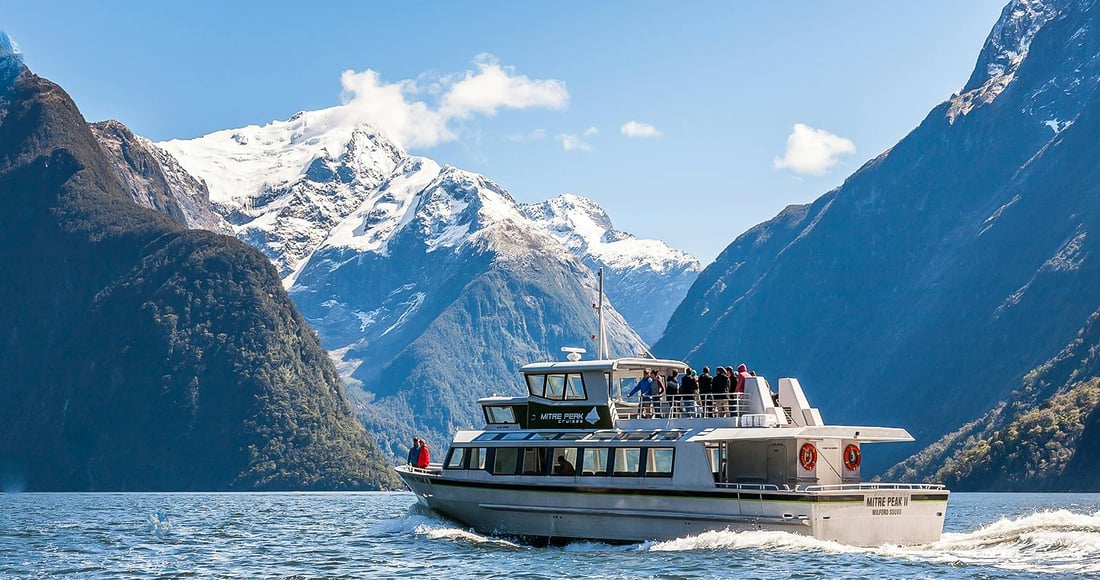
The cruise is the heart of any visit. Boats run the full length of the fiord to the Tasman Sea and back, passing beneath the cliffs, nosing into waterfalls and pausing for wildlife along the way. Most cruises last between 1 hour 40 minutes and about 2 hours, and the differences between them come down to boat size, crowd levels and what is served on board. These are the live prices on tickadoo as of July 2026:
| Cruise | From | Best for |
|---|---|---|
| Milford Sound Cruise | NZ$150 | The classic fiord cruise at the most accessible price |
| Boutique small-boat cruise | NZ$169 | Capped at 75 guests, rated 5.0 from nearly 2,000 reviews |
| Premium cruise with canapés and sparkling wine | NZ$389 | A longer, quieter sailing with gourmet catering |
| Overnight cruise with dinner and activities | NZ$669 | The fiord at dusk and dawn, long after the day boats leave |
If you only take one piece of advice from this guide, make it this: go small if you can. The boutique small-boat cruise carries no more than 75 passengers, so you get an uncrowded deck, live commentary you can actually hear, and a skipper who can tuck the boat in close to seal colonies and waterfalls. Its 5.0 rating from close to 2,000 reviews makes it the best-reviewed experience in the fiord, and at NZ$169 it costs only a little more than the standard sailing. For a proper occasion, the premium cruise with canapés and sparkling wine keeps numbers low and adds gourmet catering to the scenery.

The overnight cruise deserves a special mention. Day visitors share the fiord with everyone who made the same journey; overnight guests watch the last boats leave, then have Piopiotahi almost to themselves for kayaking, small-boat excursions, dinner and a dawn that belongs to nobody else. If Milford Sound is a once-in-a-lifetime trip for you, this is the version you will still be talking about in twenty years. And if you plan to book more than one experience while you are in New Zealand, tickadoo+ members unlock member pricing across experiences like these; see tickadoo+ membership for details.
Getting there: the Milford Road, coach trips and flights
Milford Sound sits at the end of State Highway 94, the Milford Road, which is both the only way in by car and a genuine attraction in its own right. From Te Anau it is 120km, around 2 to 2.5 hours of driving. From Queenstown it is roughly 290km and about 4.5 hours without stops, which in practice means 5.5 to 6 hours, because you will stop. The classic pauses are the Mirror Lakes boardwalk, the golden tussock of the Eglinton Valley, Monkey Creek (watch for cheeky kea, the world's only alpine parrot) and The Chasm, where the Cleddau River has carved the rock into strange sculpted bowls.
The road climbs to the Homer Tunnel, a rough-hewn 1.2km tube through solid granite at around 945 metres altitude, with traffic lights managing one-way flow in the busy summer months. Two practical warnings: Te Anau has the last fuel before Milford, and mobile coverage disappears for most of the drive. In winter and spring (June to October is the official avalanche season) carrying snow chains can be mandatory and the road closes at short notice when hazard levels rise, so always check the NZTA Milford Road status page on the morning you travel.

If you would rather not drive it yourself, coach day trips solve the problem neatly and let you watch the scenery instead of the road. The Queenstown day trip with cruise and return transfers (from NZ$265) is a long day, typically 12 to 14 hours door to door, but the driver commentary and scheduled photo stops turn the journey into part of the experience. Staying in Te Anau the night before shortens things considerably: the Te Anau day trip (from NZ$205) gets you to the water fresher and earlier than anyone coming from Queenstown.
The third option is the most spectacular of all. Flying between Queenstown and Milford takes just 35 to 45 minutes each way and crosses the Southern Alps at eye level. The fly-cruise-fly package (from NZ$749) compresses the whole adventure into about half a day and, on a clear morning, is worth every dollar.

When to visit
Every season makes a different fiord. Summer (December to February) brings the warmest weather and daylight past 9pm, with more than 15 hours between sunrise and sunset, but also the biggest crowds on the road and the water. Winter (June to August) flips that equation: visitor numbers drop away, Mitre Peak wears snow, and the cold, still air often produces the clearest, most mirror-like conditions of the year, with just under 9 hours of daylight to work with. Spring adds snowmelt to the waterfalls, and autumn tends to be settled and quiet.
Then there is the rain, which deserves a reframe. A wet forecast disappoints people who have not been told the secret: Milford Sound is arguably at its absolute best during and immediately after heavy rain, when temporary waterfalls appear by the hundred and the permanent falls thunder. Locals will tell you a rainy cruise is the lucky draw. Whatever the season, book your cruise for the time you want rather than turning up on spec, especially between December and February when popular sailings sell through.
What you will see on the water
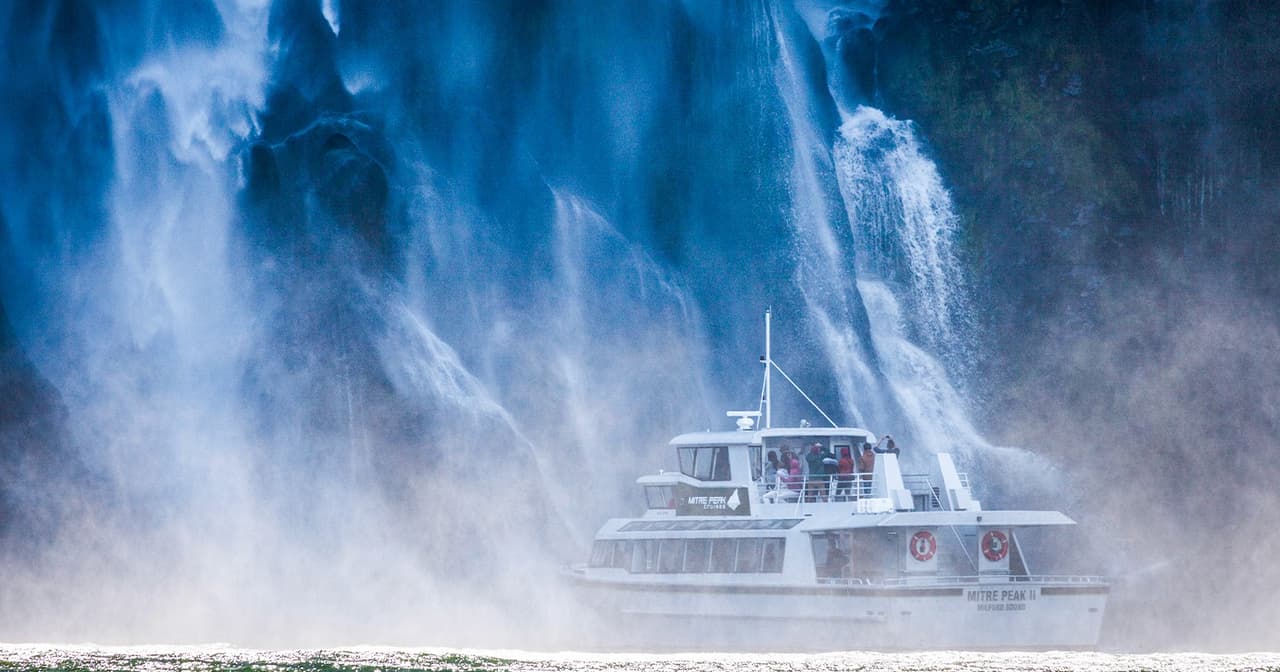
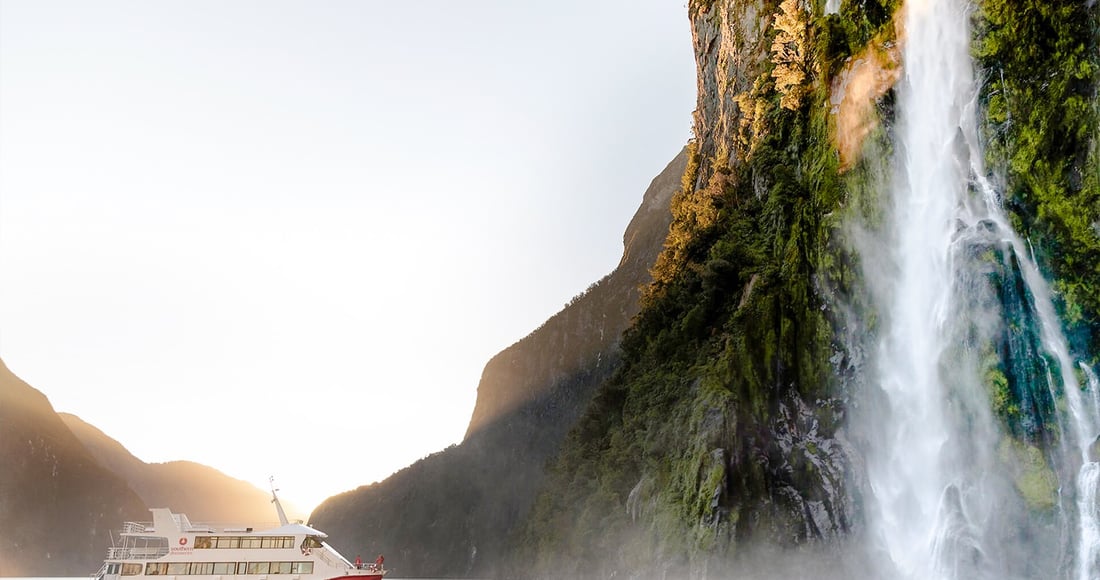
Cruises run the full length of the fiord, about 15km out to the open Tasman Sea, and the choreography is consistent whichever boat you choose. Skippers hold position beneath Stirling Falls, a glacier-fed cascade of roughly 150 metres that pours off a hanging valley between two mountains, and edge the bow into the spray close enough to soak anyone brave enough to stand at the rail. Lady Bowen Falls, at 162 metres the tallest permanent waterfall in the fiord, puts on its show near the harbour.
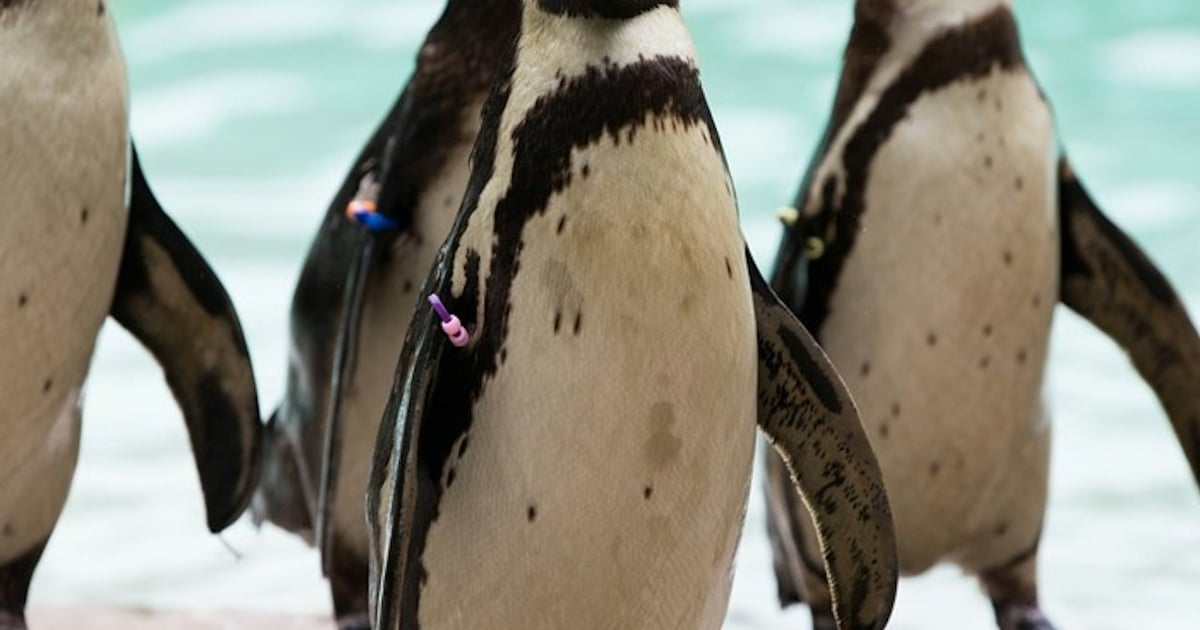
Wildlife is the other constant. New Zealand fur seals haul out year-round on Seal Rock, a low slab about two thirds of the way along the fiord that nearly every cruise slows for. A resident pod of bottlenose dolphins, unusually large animals for the species because of the cold water, appears often enough that sightings feel plentiful without ever being guaranteed. Between July and November, the fiord hosts one of its rarest residents: tawaki, the Fiordland crested penguin, one of the world's least common penguins, which comes ashore here to breed. One note for returning visitors: the underwater observatory at Harrison Cove was damaged in a 2024 storm and remains closed, so plan around the cruises, kayaks and flights instead.
Beyond the cruise
If you have more than half a day, the fiord rewards it. Kayaking is the closest you can get to the scale of the place, paddling beneath thousand-metre walls with seals surfacing alongside; guided options run from gentle one-hour paddles to committed half-day missions. Walkers can take a short water taxi to Sandfly Point, the finishing line of the Milford Track, and walk the final section of what New Zealanders call the finest walk in the world: an easy 11km return through mossy beech forest to Giant Gate Falls. The full 53.5km Milford Track is a four-day Great Walk so beloved that hut passes for the November to April season sell out within about half an hour of release each May.
For the biggest single upgrade to the day, helicopters add what no boat can: altitude and a glacier landing. The 4-hour helicopter and cruise combination from Queenstown (from NZ$1,403) pairs the flight with a sailing on the fiord, while the extended 2.5-hour helicopter tour (from NZ$795) and the alpine-landing flight (from NZ$1,258) both touch down on snow with Fiordland spread out below.
Practical tips that make the difference
First, sandflies. Piopiotahi is famous for them, and Sandfly Point did not get the name by accident. They are most active at dawn and dusk on warm, overcast days, they do not follow you onto the water, and a strong insect repellent plus long sleeves defuses the problem almost entirely. Pack it next to your rain jacket, which you should bring in every season, along with a warm layer even in January.
Second, remember how remote the settlement really is. There is no petrol station, no supermarket and no ATM at Milford Sound; the Blue Duck Café near the visitor terminal and the restaurant at Milford Sound Lodge, the fiord's only accommodation, are the dining options. Parking at the terminal is paid and card-only, and the main car park is about a ten-minute walk from the boats, so arrive at least 45 minutes before your sailing. Finally, if you are planning ahead: New Zealand has proposed an access charge for international visitors at Milford Sound from 2027 onwards, but as of mid-2026 nothing is charged; entry to Fiordland National Park itself remains free.
Frequently asked questions
How long is a Milford Sound cruise?
Most daytime cruises last between 1 hour 40 minutes and about 2 hours, sailing the full length of the fiord to the Tasman Sea and back. Premium sailings run a little longer, and the overnight cruise stays on the water from late afternoon until the following morning.
Should I visit from Queenstown or Te Anau?
Te Anau is the better base if you can spare the night: it is only 2 to 2.5 hours from the fiord, and day trips from there (from NZ$205) are far less tiring. From Queenstown, expect a 12 to 14 hour day by coach (from NZ$265) or a half-day fly-cruise-fly trip (from NZ$749).
Is a rainy day at Milford Sound ruined?
Quite the opposite. Rain multiplies the waterfalls, sending hundreds of temporary cascades down the fiord walls, and cruises sail in all weather. Many regulars consider a wet day the best possible luck. Bring a rain jacket and embrace it.
What wildlife will I see?
New Zealand fur seals on Seal Rock are close to a certainty, bottlenose dolphins appear regularly year-round, and between July and November you may spot tawaki, the rare Fiordland crested penguin, during its breeding season. Kea, the alpine parrot, are common along the Milford Road.
Do I need to book a cruise in advance?
In summer, yes: popular departure times sell out, especially the small-boat sailings with capped passenger numbers. In quieter months you have more flexibility, but booking ahead still secures the mid-morning departures that catch the best light. See current availability at Milford Sound experiences.
Is the Milford Sound underwater observatory open?
No. The floating observatory at Harrison Cove was damaged in a storm in September 2024 and remains closed, with no reopening date announced. Cruises, kayaking and scenic flights all operate as normal.
How much does a trip to Milford Sound cost?
On live tickadoo prices verified in July 2026, cruises start at NZ$150, day trips with the cruise included start at NZ$205 from Te Anau and NZ$265 from Queenstown, and fly-cruise-fly packages from Queenstown start at NZ$749. tickadoo+ members unlock member pricing; see tickadoo+ membership.
Ready to plan the rest of the trip? Browse every bookable cruise, flight and tour at Milford Sound on tickadoo, see what else is on in Queenstown, or start from the lakeside in Te Anau.

Built by the founders of London Theatre Direct, with 25 years of expertise in theatre ticketing. The tickadoo editorial team covers West End and Broadway shows, attractions, tours and experiences across 700+ cities.
About the team